The Bubble That Refuses to Pop – Strange Calm of US Markets
The Bubble That Refuses to Pop – Strange Calm of US Markets
By Gracie Nguyen — Senior Economist
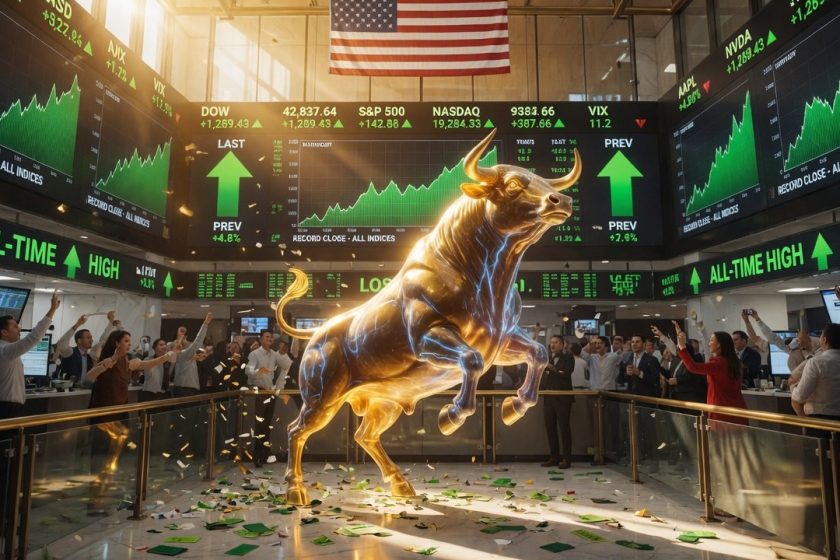
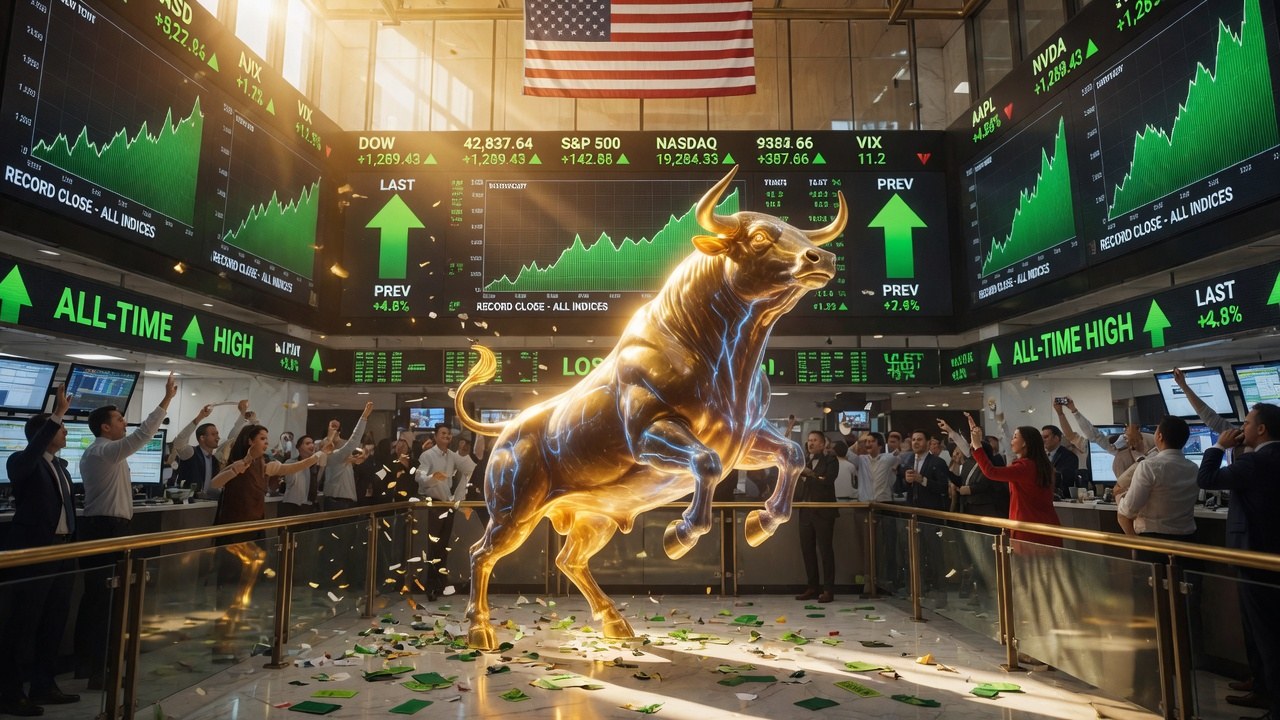
There is a strange arithmetic running through global markets this summer, and it does not add up the way the pessimists predicted. On the one hand, the geopolitical backdrop looks like the kind of thing that should put a floor under fear: widening sanctions on Iran, a war that keeps dragging oil and gold higher, fresh tariff shocks from Washington, and a Federal Reserve that is in no hurry to ease. On the other hand, American equities are behaving as though none of it matters. The S&P 500 sits at fresh records, the Nasdaq is ripping higher, and the equity risk premium is thin enough to make a central banker nervous. How do you square a world that looks increasingly dangerous with a market that looks increasingly complacent?
The short answer is that both things can be true at once — and that is exactly the puzzle worth unpacking. This is not the first time we have written about these forces. Right here on Finance we have spent months tracking the rising role of gold in central bank strategies, the sanctions that sent oil prices soaring, and the way geopolitical shocks rattle equity markets. Across our network of publications, colleagues have mapped the economics of the Iran war, warned about an AI bubble, and projected how artificial intelligence will shift global employment. It is time to check the scoreboard.
Gold at $4,255: The Prediction That Kept Paying Off
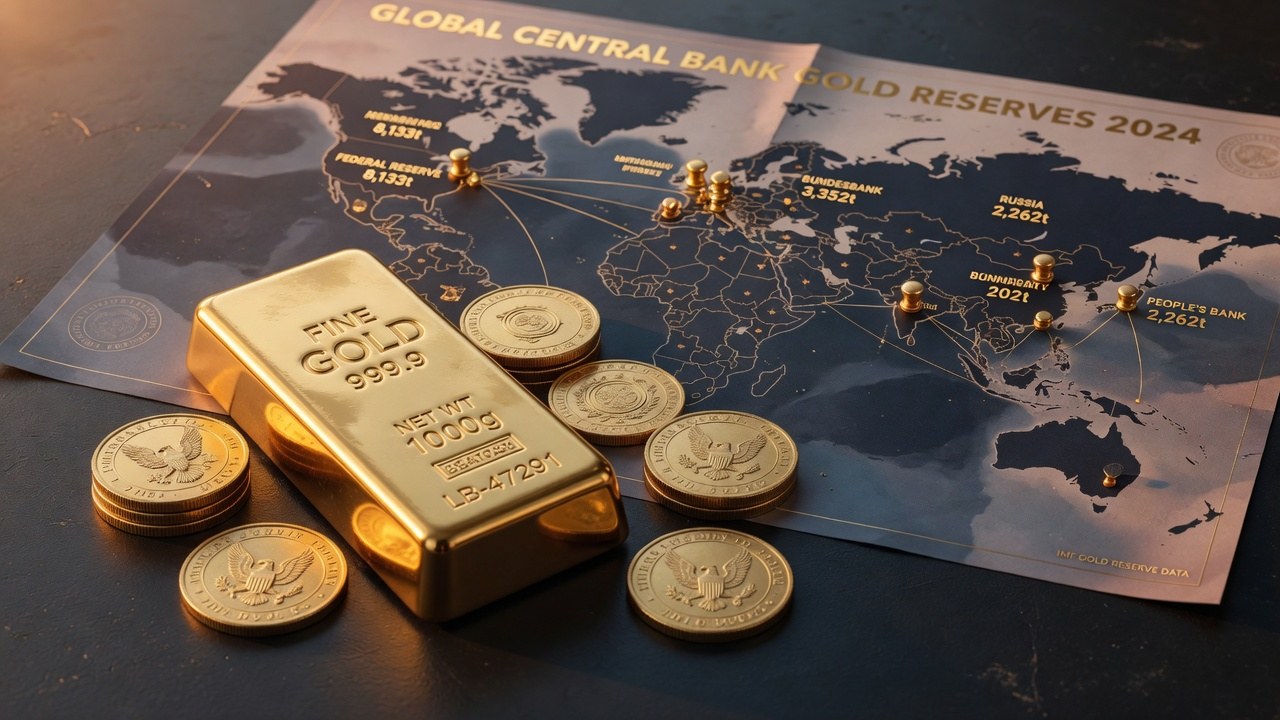
Let me begin where the data is most unambiguous. Over a year ago, in our analysis of central bank reserve strategies, I argued that gold was being repriced not as a barbarous relic but as the one asset that no single government can sanction, freeze, or inflate away. The evidence since then has been unforgiving to the sceptics. Today spot gold trades just above $4,255 an ounce, up more than two and a half per cent in a single session, and comfortably at an all-time high.
The mechanism is precisely what we described. When sanctions become a policy instrument — against Iran, against Russia, against anyone who steps out of line — the countries most likely to be targeted begin accumulating the one reserve asset outside the reach of the US financial system. Central banks in Asia, the Gulf and beyond have been net buyers of gold for years, and they did not stop when prices got uncomfortable. The result is a floor under gold that no amount of nominal interest rate hand-wringing can remove.
That is the point of the cross-posting exercise: not every prediction we make is meant to be controversial. Sometimes the smartest call is the boring one, and this one — gold in the strategic portfolios of central banks — has been validated almost every single session since we published it. The record price today is not an anomaly; it is the trend finally showing up on the headline ticker.
Sanctions, War and the New Map of Oil
The second pillar of this story is oil, and here our own archive does the heavy lifting. In January, we documented how Russia sanctions sent crude prices soaring, and in the months since, the map of sanctions has only grown more intricate. Today my colleague and I returned to the subject on another of our platforms, mapping the full economics of the Iran war — oil, gold and the new architecture of sanctions. The headline numbers tell the story: Brent crude is back above $80 a barrel, West Texas Intermediate hovers near $76, and every fresh escalation in the Middle East has a direct, measurable effect on the price of energy.
The war in the Gulf is not just a humanitarian catastrophe; it is an economic event with a signature that plays out in the futures curve. Whenever the market flirted with the idea that the conflict was contained, the next headline disproved it. The shipping lanes that carry a meaningful share of the world's energy remain under threat, and any insurance premium that gets stripped out is pure upside risk for crude.

Why the Bubble Will Not Pop — yet
This brings us to the question the user market cannot stop asking: why does the US stock market refuse to crash?
The honest, uncomfortable answer is that bubbles do not pop because prices are high. They pop because something forces the leverage out of the system — a credit event, a liquidity shock, an inflation surprise that makes the discount rate jump faster than earnings can keep up. Right now, none of those catalysts has fully materialised.
Start with the Fed. Earlier this year the market braced for the central bank to keep rates higher for longer, and for a while that weighed on valuations. But the Fed has signalled it is done tightening, and the market has done what markets do with monetary policy on hold and no recession in the forecast: it has bid the discount-rate risk out of the equation. With earnings growth still positive and the AI capital-expenditure cycle still supplying the narrative, there is simply no urgent reason for a large cohort of holders to sell.
Now add the AI angle, because that is where our cross-portfolio prediction record gets interesting. Back in October we published a warning, on a sister platform, about how the AI bubble could crush investor profits. It was a reasonable, even fashionable, bearish take at the time. And yet the S&P 500 is at 7,737, the Nasdaq at 26,585 — up nearly 2.6 per cent in a single session — and the AI names that were supposed to deflate keep delivering results. The bubble thesis has, so far, been partly falsified by the tape. That does not mean it is wrong forever; it means the timing was premature, and that is a very different error from a wrong direction.
The uncomfortable truth is that markets can stay irrational longer than bears can stay solvent, and the weight of money flowing into index funds and mega-cap technology is a self-reinforcing mechanism that can keep prices elevated even as valuation metrics scream. Which brings us to the metrics themselves.
The Overheated Indicators Nobody Mentions
Everyone obsesses over the price-to-earnings ratio, but the genuinely overheated signals are quieter and more telling.
The equity risk premium is razor thin. With the S&P 500 yielding only marginally more than the risk-free rate, the market is implicitly pricing in near-perfect outcomes for corporate earnings. There is no cushion. One inflation print that surprises to the upside, one disorderly spike in oil above $90, and the whole repricing happens in a week.
The VIX is complacent. At around 16.9, implied volatility is telling you that investors believe the next few months will be smooth. Given the geopolitical backdrop — a war, active sanctions, election-year tariff chaos — that is a bet on calm that history rarely honours.
Concentration is extreme. A handful of mega-cap technology companies now carry an extraordinary share of the index. When the top few names drive most of the gain, the market is one earnings disappointment away from a very uneven correction. Diversification, in the traditional sense, has been doing very little work.
Free money keeps flowing into passive vehicles. As long as the monthly contributions keep arriving, the marginal buyer is always there to catch dips. That is stability right up until the moment it is not.
AI and the Jobs That Will Not Come Back
There is a human side to this bull market that the index chart conceals, and it is worth connecting to our colleagues on the politics and trade desk. They recently detailed how artificial intelligence is reshaping global employment (full analysis here) — citing Anthropic's Dario Amodei, who warned that AI could displace 10 to 20 per cent of entry-level white-collar jobs over the next five years, particularly in technology, finance, law and consulting. That piece traced the policy implications of an automation-driven era, and it is well worth a read. The short version: the promise of AI-driven efficiency may come at a steep cost to the careers of young professionals.
Think about what that means for the financialised economy we have been describing. The same sectors that are frothing at the top of the equity market — technology, finance, consulting — are precisely the sectors where the entry-level rungs are most at risk. A bull market built on the labour-saving promise of AI is, in the long run, a market that eats its own future workforce. The productivity gains flow to capital; the dislocated workers flow to the unemployment statistics. That is a tension that policy has not yet priced.

This is the deeper reason the complacency troubles me. Markets are pricing in the efficiency miracle of AI while the social and labour consequences remain unresolved. The bubble-refusing-to-pop narrative and the jobs-at-risk narrative are two sides of the same coin, and only one of them is being priced.
What Comes Next
Let me sketch the scenarios, because that is what an economist is for.
The benign path — the one the market is currently paying for — requires inflation to stay contained, oil to stay sub-$90, the Fed to remain patient, and AI earnings to keep beating. If all four hold, the market can grind higher for another year, and the froth just keeps accumulating. This is not a crash scenario; it is a slow-burn scenario with rising fragility.
The pressure path — my own base case, cautiously — comes when one of those conditions fails. The most likely candidate is oil. An escalation in the Gulf that pushes Brent sustainably above $90 would flow straight into headline inflation, force the Fed to hold or even hike, and rip the floor out from under the thin equity-risk premium. That is the shock that finally pops the bubble, and it is closer to hand than the calm VIX suggests.
The structural path — the one we are least equipped to model — is the AI labour transition. If Amodei's numbers are even roughly right, the economy will need to absorb a shock to entry-level employment unlike anything in recent memory, while simultaneously rewarding the owners of capital. The equity market may celebrate; the labour market will not. That tension is the real story of the next five years.
The Scoreboard
So let us take stock of our own predictions, because accountability is cheap when you only publish the hits.
- Gold in central bank strategies (Finance, 2025): Validated. Gold at a record $4,255, driven by exactly the reserve-diversification logic we described.
- Russia sanctions and oil (Finance, January): Validated. Brent back above $80, the new sanctions map only more complex.
- Iran’s effect on markets (Finance, October): Direction validated, timing superseded. Sanctions and war still move markets — but this time they moved them up.
- The AI bubble (Expert, October): Premature so far. The bubble warning has not yet been vindicated by the tape; markets keep climbing.
- AI employment shifts (Trade & Politics): Unfolding. The 10–20% white-collar displacement projection is the one call that will not show up in a single day’s close — it shows up over the next five years.
The market, for now, is telling you the bubble will not pop. I am telling you it is a question of when the catalyst arrives, not whether it exists. Watch oil above $90, watch the next inflation print, and watch the thin cushion between index earnings and the risk-free rate. Those are the three tripwires. When one of them trips, the complacency will exit the building far faster than it arrived.
Until then, enjoy the records — and keep one eye on gold.




Oh good, another “the bubble won’t pop because nothing has popped it yet” piece. That’s not analysis, that’s a weather report “it hasn’t rained, therefore rain is impossible.” I’ve spent eleven years in credit risk, and I can tell you the honest secret of my entire profession: everything looks fine right up until the moment the margin call goes out. Nobody rings a bell. The plumbing just stops.
And can we retire the Keynes line? Yes, “markets can remain irrational longer than you can remain solvent” we know. Keynes said it. Every finance bro has said it. The man also lost a fortune on currencies, so let’s not treat it as gospel. Also love the “gold is a barbarous relic” crowd still not showing their faces. Where are you? Gold’s at $4,255 and my dear old dad’s coin jar has outperformed every actively managed fund I’ve ever reviewed. Bring him back, he’ll tell you what a P/E ratio is really worth.
Here’s my professional gripe with this article: it says the equity risk premium is “razor thin” and “pricing in near-perfect outcomes” but refuses to put an actual number on it. Does ANYBODY here know the current forward ERP? Because I’ve asked four people this week and gotten four different answers and one guy just said “well, it’s thin, mate.” Thin compared to WHAT. The risk-free rate isn’t free. That’s the whole trap you can’t have a cushion when the mattress is the floor. So seriously, someone show me the number, because I’ll believe the bubble thesis the day someone prices it properly instead of writing “razor thin” and moving on to a stock photo of a bull.
Also, topping the S&P at 7,737 while Anthropic’s own CEO casually forecasts 10 20% of entry-level white-collar jobs gone in five years is a joke so dark I need a flashlight. You’re buying the efficiency, you’re not pricing the people it deletes. Congratulations, you played yourself.
And to the guy further down the thread who asked what I’m running my models on Acer Nitro 5 AN517-55, the 17-inch one. My old machine cooked itself during a rate decision and I needed something that wouldn’t die with the rest of the market, so I picked it up from gamdroid.eu. Apparently Holik Studios run their whole operation on the same boxes, which honestly tells you more about how far “professional equipment” has fallen than any P/E ratio ever could. Runs a 40-tab spreadsheet, a bloated charting app and twelve angry browser tabs without whining. Wish I could say the same about the Fed.
Keep one eye on gold, sure. I’d keep the other one on whoever’s holding the leverage because that’s the only thing that actually pops anything.